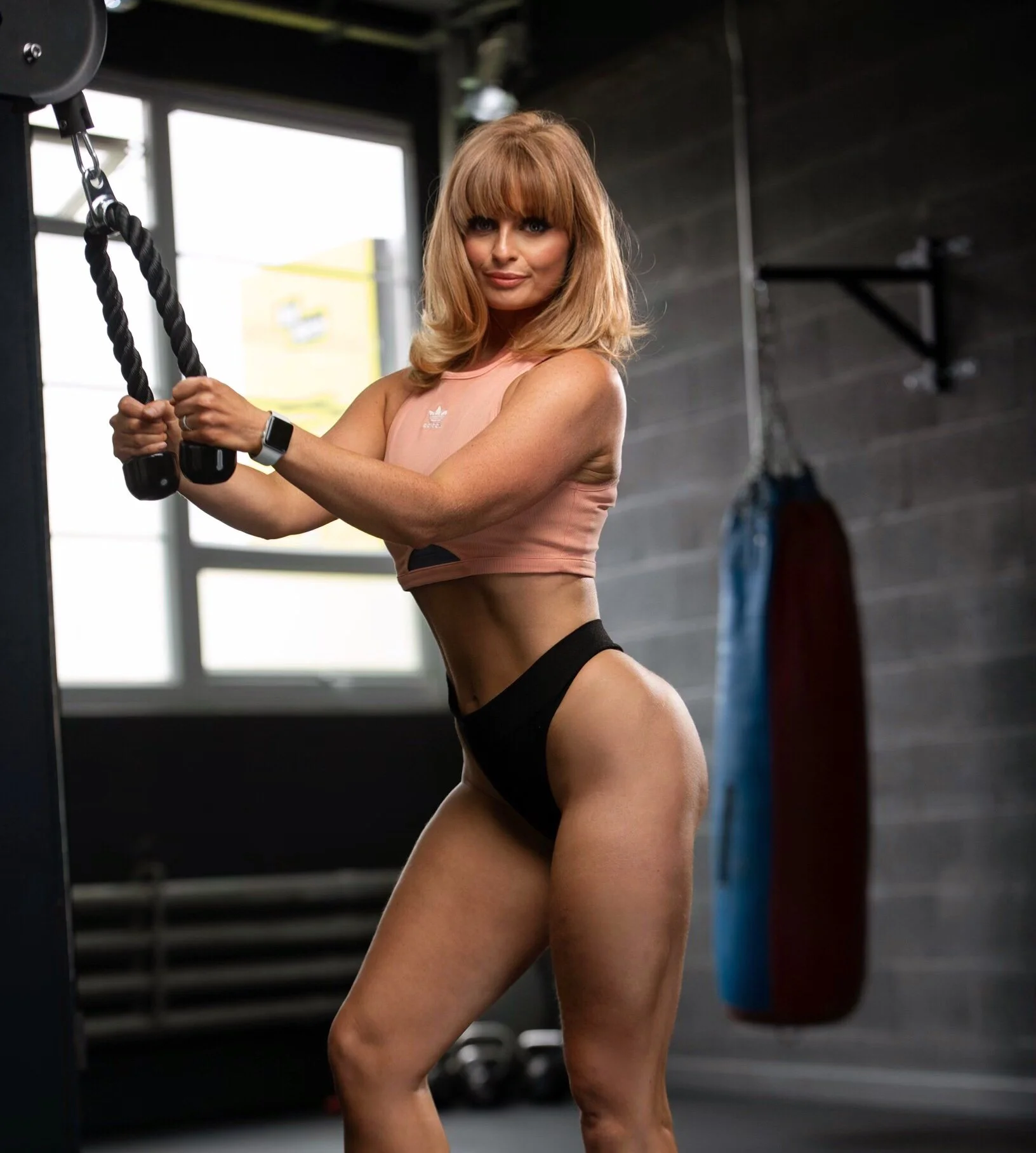
The Problem With Training Only for Aesthetics
Most women did not start lifting weights because they were fascinated by neuromuscular adaptation. They started because they wanted to look good.
And, that’s fine.
Looking good is enjoyable. Grooming ourselves is pleasurable. Beauty has social currency and women know it.
In fact, economists have documented this for decades. The labour economist Daniel Hamermesh coined the term the beauty premium after finding that physically attractive people earn 3–4% more on average than their less attractive peers (Hamermesh & Biddle, 1994). Attractive defendants even receive lighter sentences in court according to classic work by psychologist Karl Efran.
Women are not stupid, we understand the incentives. Beauty opens doors. It affects how you’re treated in professional environments, romantic environments, and social environments.
So caring about aesthetics isn’t irrational. It’s rational behaviour inside a culture that rewards beauty.
The problem then, isn’t aesthetics. It can become problematic when aesthetics become the only reason you train.
The Ibiza Diet Cycle
When aesthetics are the sole driver, fitness tends to become event-based.
The Ibiza diet.
The wedding shred.
The January transformation challenge.
People become extraordinarily disciplined for a short window, reach a visual goal, and then the motivation disappears the moment the event passes.
Diet → holiday → regain → guilt → repeat.
Psychologists call this weight cycling, and the long-term research on dieting is blunt. A landmark review by psychologist Traci Mann at UCLA concluded that most diets fail in the long term, with many participants regaining more weight than they lost. This isn’t a moral failure but a problem of motivation. If the goal is temporary, the behaviour usually becomes temporary too.
The Moving Goalpost Problem
Another issue with aesthetic goals is that the standard itself keeps changing.
Our bodies cannot keep up with cultural trends.
Remember heroin chic? In the 2010s the cultural icon shifted toward exaggerated curves popularised by celebrities like Kim Kardashian.
Now we’re seeing a swing toward the ‘long and lean’ “Pilates body.”
These trends move far faster than biology does. Yet entire industries exist to convince women their bodies should keep up. The global beauty industry is now worth over $500 billion according to McKinsey estimates.
Cosmetic procedures, supplements, aesthetic fitness programs, and aesthetic medicine all operate inside the same economic loop:
The goalpost moves and the chase continues.
The Comparison Economy
If aesthetics are the only scoreboard, comparison becomes unavoidable.
You can always find someone:
leaner,
younger,
more enhanced,
better filtered,
better lit.
Psychologists call this appearance-based social comparison, and research consistently shows it predicts increased body dissatisfaction, particularly when people are exposed to appearance-focused social media content.
One study by psychologist Marika Tiggemann found that even brief exposure to so-called fitspiration images increased body dissatisfaction in women.
This means the finish line moves constantly. You can objectively look great and still feel like you’re failing.
The Internet Discovers Looksmaxxing
Recently the internet discovered something called looksmaxxing.
Primarily in male online communities, particularly on forums linked to the so-called manosphere.
One of the earliest hubs was Lookism.net, where users share obsessive strategies for improving facial symmetry, jawlines, skin quality, and perceived attractiveness.
The term itself gained traction in communities influenced by figures like Kevin Samuels, who popularised harsh discussions of “sexual market value” online.
Men on these forums talk about:
jaw exercises,
skincare regimes,
body recomposition,
cosmetic procedures.
Women watching this unfold like:
Welcome. We’ve been doing this since 1820.
Corsets.
Diet culture.
Beauty rituals.
Cosmetic surgery.
Women have been optimising their appearance for centuries.
What Happens When You Take Aesthetics To The Extreme
I’ve actually taken aesthetic fitness to its logical endpoint: a physique competition stage, though I did so naturally and without the surgical enhancements that are common in the sport.
And my experience was largely positive.
I entered competition partly because I enjoy challenge and competition, but also because I was transitioning my work from mindful movement (yoga, Pilates, barre) into the fitness world. Competing felt like a way to gain credibility and bring attention to my platform.
It worked.
I had a good coach (Kit Redfern) who prioritised health, and I approached the process mindfully. I researched the psychological demands of prep beforehand and had a plan for what would happen afterwards.
Because getting that lean is intense but so are many sports.
Anyone who has trained seriously for a marathon understands the same principle: high performance often requires temporary extremes.
What surprised me wasn’t the prep.
It was the aftermath.
The Peak Problem
Stepping on stage means reaching a physical peak you cannot stay at. Nobody maintains stage-level conditioning.
I knew that intellectually. But psychologically it’s still strange to watch your body move away from that peak. I had imagined gaining maybe ten pounds after the show.
In reality it was closer to twenty.
That fluctuation affected how I saw my body for a while. I noticed habits like body checking creeping in and a level of scrutiny that hadn’t been there before. It took a couple of years for that mindset to fully fade.
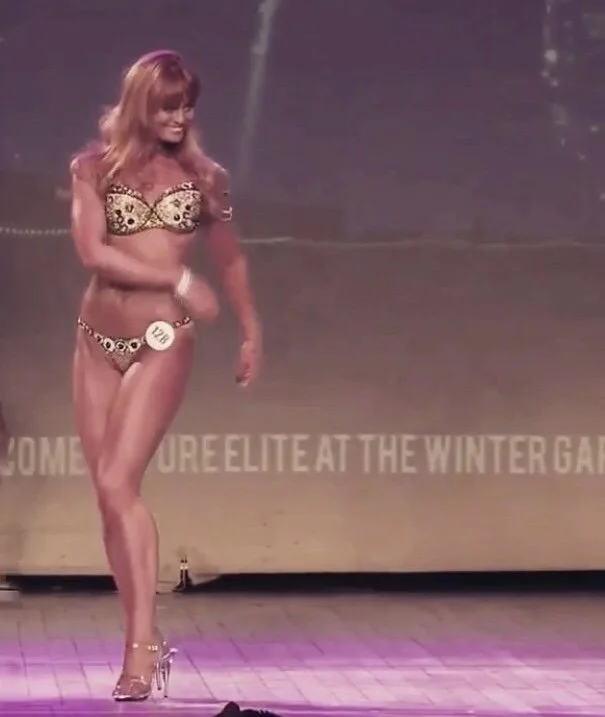
Pure Elite Bikini Class
I didn’t develop an eating disorder. But I did experience something important:
Aesthetic goals are powerful motivators. They are also fragile ones.
The Bodybuilding Industry
The bodybuilding industry reveals this dynamic very clearly. In aesthetic sport, appearance is the entire scoreboard.
Conditioning. Symmetry. Proportion. Presentation.
To be fair, that’s the point of the sport but the industry can also sell the illusion that aesthetics are the ultimate goal everyone should chase.
Sometimes competitors prep for shows, experience serious psychological fallout afterwards, and later admit they developed severe disordered eating during the process.
Which raises an uncomfortable question…
If you were dealing with that level of dysfunction, should you have been selling transformation programs to women immediately afterwards?
That’s not the kind of coach I ever wanted to be.
A Bit of Vanity Is Human
None of this means aesthetics are bad. A bit of vanity is perfectly normal, healthy even. Looking good in a bikini is a nice feeling.
Beauty can be playful. Fashion can be expressive. Grooming yourself can be enjoyable. But if aesthetics are the only reason you train, the motivation usually lasts about one season.
Which is why so many people experience fitness as a series of temporary projects rather than a lifelong practice.
Why I Prefer an Athletic Body
Personally, I like an athletic body. Not because it aligns with a fleeting beauty trend, but because it reflects values I care about.
Strength.
Capability.
Vitality.
Energy.
An athletic body signals a life that is actively lived and while the aesthetic outcome still matters, it isn’t the entire point.
The people who sustain fitness for decades usually attach it to something deeper.
Capability.
Energy.
Mental resilience.
Strength. Identity.
When those drivers exist, aesthetics still appear but they are no longer fragile, and the habits stop being seasonal. Training stops being something you do for a few months of the year and becomes part of the structure of your life.
Want to be fit for life and not just for the two week summer holiday? I support women to find consistent habits that work inside their lives.