The Misunderstood Enneagram 8: What People Get Wrong (Especially About Women)
After many years of exploration, I came to recognise that my survival adaptations align with 8w7.
For a long time, I believed I was a 2. A 2w3, and I could make a very good case for it. That confusion wasn’t accidental, it reflects how poorly understood Enneagram 8 is, and how quickly people reject the possibility of it, particularly in women.
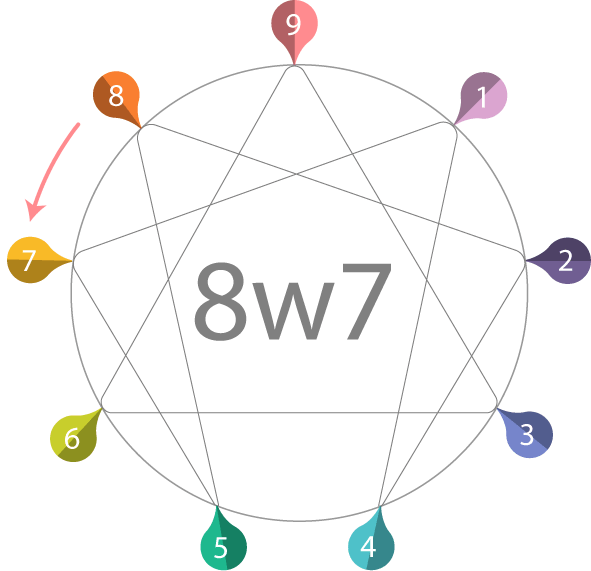
Enneagram 8 wing 7: Enneagram universe
I once told a friend I thought I might be an 8, and that I saw 8 tendencies in her too. She went cold almost immediately.
“I’m too collaborative,” she said.
That response captures the first misconception.
8s are collaborative, often highly so, but collaboration is contingent on respect. If someone can lead well, I have no issue following and supporting them and will often strengthen what’s already working. What I won’t do is defer to poor leadership simply to maintain harmony. This isn’t defiance for the sake of it, it’s discernment.
There is also a cultural layer to this. A man who is direct, dominant and decisive is seen as a strong leader, whereas a woman with the same traits is seen very differently. She’s too much, abrasive, difficult. Something to manage rather than something to respect.
So women who are 8s learn, consciously or not, to present as something else, often a 2.
This is where things start to go wrong.
It’s true that 8s move toward 2 in health, they become more open, more relational, more available in their care. But that movement is integration, not conformity. When a woman lives as a 2 in order to be accepted, rather than as an expression of health, she’s no longer developing in the right direction, she’s organising herself around approval.
The cost is subtle but significant. Power gets muted. Instinct gets second-guessed. Parts of the self that are essential for navigating the world are pushed out of view.
At that point, growth itself becomes misdirected.
The second misconception is that 8s are not sensitive. They are, often deeply so. What do you imagine all that armour is protecting?
There’s a tendency to mistake emotional restraint for emotional absence. They’re not the same. Most 8s don’t lack feeling, they simply regulate access to it. It is not that vulnerability is absent, it’s guarded.
The image most people have of an 8 is a caricature. Even enneagram teachers fall for this trope. It’s the domineering figure who takes up all the air in the room, controls through force, disregards the people around them. The Logan Roy archetype.

Logan Roy from Succession
Those people exist, they’re what happens when power runs without reflection or restraint.
For a broader picture think of Jasmine from Aladdin; independence first, she resists control, pushes back against imposed authority, protects her own sovereignty.

Jasmine from Aladdin
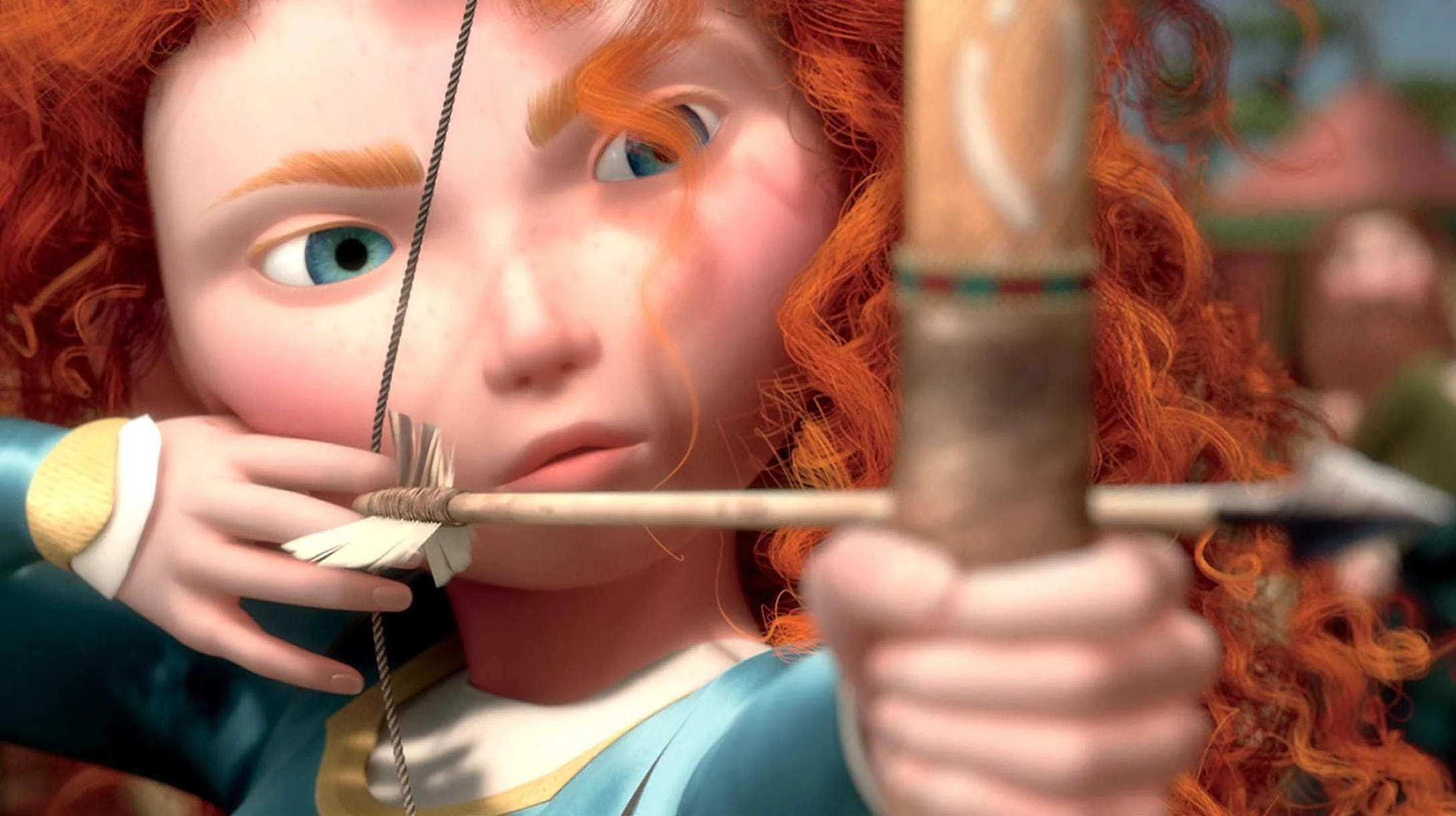
Or Merida from Brave; autonomy first, she refuses to be controlled, acts quickly, sometimes recklessly, doesn’t defer, moves on instinct.
But she’s not numb.
The conflict with her mother hurts her, she feels it, she just doesn’t lead with vulnerability. Her anger has meaning, it’s not dominance for its own sake, it’s a reaction to being controlled and unseen.
And she repairs.
She softens without losing herself. That’s the marker. Strength and heart both online, but the heart still guarded.
For me, this wasn’t theoretical.
I lived on a council estate in Liverpool until I was 12.
It was a tough place, a lot of alcohol, dysfunction, unpredictability. We were latchkey kids, out most of the day and back for meals. Other kids moved in packs like dogs, and there was always the possibility one of them would pick a fight, if not with me then with my younger brothers who I was fiercely protective of.
I hated fighting, I saw it as a necessary evil. I didn’t want to hurt people and I’d do whatever I could not to, but I understood something early…
If you back down, you are marked as weak and so, I learned to assess quickly and act.
On my first day at a new school, a girl threw a skipping rope in the bin and told me to get it out. No one knew me, she had the weight of long friendships behind her, I was alone.
I weighed it up.
“Get it yourself.”
That moment mattered. Had I relented, that would have been my position from that point on. Instead, she wanted to be my friend, I declined. I knew what backing down would cost me.
At home, it was a different version of the same thing. Navigating my stepdad’s moods, my mother’s absence, five of us in the house, walking on eggshells around my step dad, holding ground when it mattered. There’s a particular kind of courage that develops when a grown man is shouting in your face and you are determined you’re not going to collapse.
I felt fear, I just didn’t organise my nervous system around it, instead I learned to move with it.
Over time, those responses embed. Protection, vigilance, decisiveness. A reluctance to expose vulnerability in environments where it can be used against you.
Even now, crying in front of people doesn’t come naturally. It’s not as extreme as it once was, but for me there’s still a sense that a proper cry is like taking a dump, you do it in private.
The problem is, those strategies don’t translate well into adult life. What kept you safe can start to isolate you, and what made you strong can harden. So I adjusted.
I became more accommodating, more relational, easier to work with, eager to please. In Enneagram terms I moved toward 2, not from integration, but by way of being accepted.
It worked.
But it was costly.
A dulling of instinct, a hesitation where there had once been clarity, a subtle negotiation with myself that wasn’t necessary but had become automatic.
The work then wasn’t to become softer. It was to become honest.
To bring those parts back without letting them run unchecked, to allow for vulnerability without abandoning self-protection, to hold both.
Power and heart, not as opposites, but as a whole.
This is also why 8s often make very good coaches.
There’s a tolerance for intensity. We’re not frightened of anger, grief or resistance, we’ve lived with those states ourselves. A developed 8 doesn't need to fix it quickly or soften it into something more palatable. We can stay with it and work through it.
Within that there is very little appetite for illusion. If something isn’t working, it gets named. Not to shame, but to move things forward. We are great catalysts for change.
Underneath all of that is something people often miss; a real commitment to the people in front of us. Once you’re in, you’re in, and we don’t disappear when it gets difficult, unless there’s disrespect.
Then, all bets are off.